
Roofing
Roofing Tear-Off Dumpster Sizing
Re-roofing in Baton Rouge? Shingle debris is heavier than it looks. Here's how we size the container right. Call Fonte & Sons at (225) 529-1183.
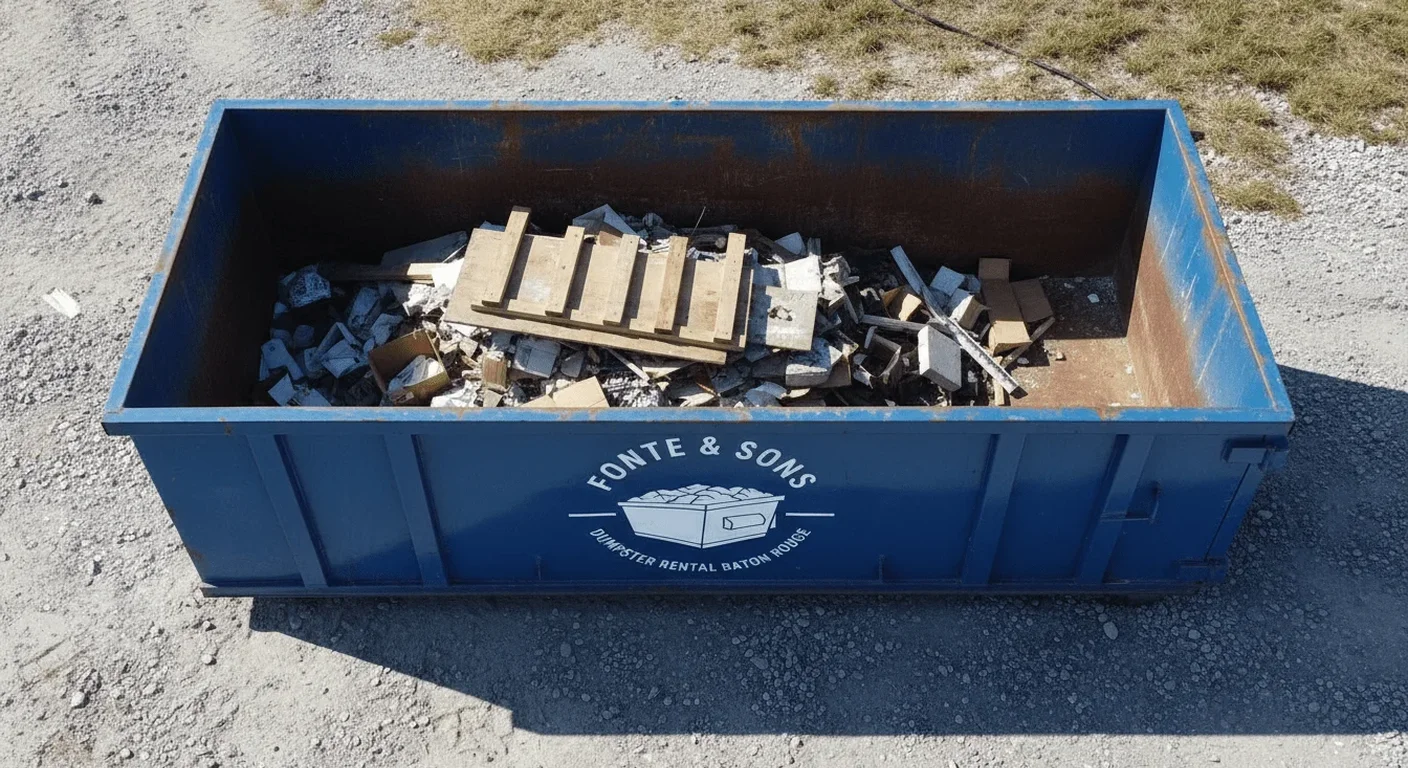
Of every debris type we haul, roofing tear-off is the one most likely to catch homeowners and contractors off guard on weight. Shingles look light one at a time, but a full tear-off adds up to a genuinely heavy load, and getting the size wrong here is one of the more expensive mistakes on a home project. Here is how we size roofing jobs across Baton Rouge and East Baton Rouge Parish.
Why Roofing Debris Is Heavier Than It Looks
Asphalt shingles are dense, and plenty of Baton Rouge-area homes have more than one layer applied over the years — a tear-off frequently pulls up two layers of old shingles at once. Add underlayment, and on some homes, sections of decking that need replacing, and the weight per square foot climbs quickly. This is the single biggest reason roofing jobs need weight-focused sizing rather than a volume guess based on how big the pile looks on a tarp.
Sizing by Roof Size
As a general guide:
- A small to mid-size single-layer asphalt shingle tear-off on an average single-story home often fits a 20 yard container.
- Larger homes or multi-layer tear-offs typically need a 30 yard to stay within a comfortable weight margin.
- Very large roofs, commercial buildings, or full multi-layer tear-offs may call for a 40 yard or a scheduled swap partway through the job.
Layer Count Changes the Math Fast
Each additional layer of shingles roughly compounds the weight problem rather than adding to it in a simple straight line, since older layers are often brittle and break into denser fragments as they come off. If your roofer already knows there are two or three layers under the current one, mention that number when you book — it is the single most useful detail for getting the size right the first time.
These are starting points, not guarantees — the real number depends on your roof's actual square footage, pitch, layer count and material. Tell us those details and we will size it precisely rather than let a guess turn into a weight overage mid-project.
Baton Rouge's Roofing Season: Storms, Humidity and Timing
Our humid subtropical climate means afternoon thunderstorms are a routine part of the forecast for much of the year, and roofing crews plan tear-off days around them out of necessity — an open roof and a fast-moving storm are not a combination anyone wants. Hurricane season, June through November, adds another real driver of roofing work here: wind-driven rain and storm damage send a steady stream of repair and full-replacement jobs our way each year, often on a compressed timeline once a homeowner's insurance claim is approved. We plan our own scheduling around that same seasonal pattern, which is part of why fast delivery and pickup turnaround matter so much for roofing work specifically.
Placement and Timing Around the Tear-Off
A container full of shingles is one of the heaviest loads we haul, which makes stable, load-bearing placement especially important — a paved driveway or compacted surface, not soft lawn, and not ground that is still saturated from a recent rain given how flat and clay-heavy the soil is around much of the parish. Our drivers confirm the best spot before setting the container down. Most roofing crews tear off and dispose of debris in a compressed window, sometimes within a single day for a smaller home, which is exactly what our same-day delivery service is built for — call before noon and we can often have a container on site the same day.
Working With Your Roofing Contractor
If your roofer is handling logistics, we are glad to coordinate delivery and pickup timing directly with their crew. If you are managing the project yourself, our construction dumpster rental and roll-off dumpster rental services both cover roofing tear-off work. If your job is storm-damage repair, our hurricane season debris cleanup guide covers the broader picture.
What Happens If the Load Runs Heavier Than Expected
Occasionally a tear-off turns up more layers than the crew expected once they get into it, or reveals decking damage that adds debris to the load. If that happens, call us — we would rather adjust the plan, whether that means a size upgrade for the next job or a heads-up about the weight allowance, than have it turn into a surprise at pickup. The same goes for metal roofing or less common materials: metal panels are lighter by weight but bulkier and awkward to stack efficiently, which affects how a container fills relative to its weight allowance, so mention it up front if your project involves anything other than a standard asphalt shingle tear-off.
Either way, describe the roof and we will get the size and schedule right — call (225) 529-1183 to set it up.
Need a container in Baton Rouge or anywhere in East Baton Rouge Parish? Call (225) 529-1183 and describe the job. We will name the size, the flat rate and a delivery slot — often the same day. No forms, no waiting on an email.